RECENT POSTS
21.March.2026
Melt and Pour vs. Cold Process Soap: Is It Cheating or Just a Different Art?
0 Comments
Melt and Pour vs. Cold Process Soap: Is It Cheating or Just a Different Art?
In the handmade soap world, few debates spark as much passion as the conversation around melt & pour soap versus cold process soap. If you've spent time in soap-making communities, you’ve probably heard statements like:
-
“Melt & pour isn’t real soapmaking.”
-
“Cold process is the only authentic method.”
-
“Using melt & pour is cheating.”
But is that actually true?
The reality is far more nuanced. Both methods have their place in the craft, and both require skill, creativity, and knowledge of ingredients. Let’s break down the differences, the myths, and why both styles deserve respect in the soapmaking world.
Understanding the Two Methods
Cold Process Soap
Cold process soapmaking is the traditional method that dates back centuries. It involves a chemical reaction called saponification, where oils and fats react with lye (sodium hydroxide) to create soap.
Soap makers formulate recipes using different oils, each bringing unique properties to the final bar.
Common oils used include:
-
Olive oil – gentle and moisturizing
-
Coconut oil – cleansing and bubbly
-
Shea butter – nourishing and conditioning
-
Castor oil – boosts lather
The process involves carefully measuring ingredients, mixing the lye solution with oils, blending to trace, pouring into molds, and allowing the soap to cure for 4–6 weeks.
During curing, excess water evaporates and the soap becomes milder and harder.
Cold process soap is often praised because the maker controls every ingredient from start to finish.
Melt & Pour Soap
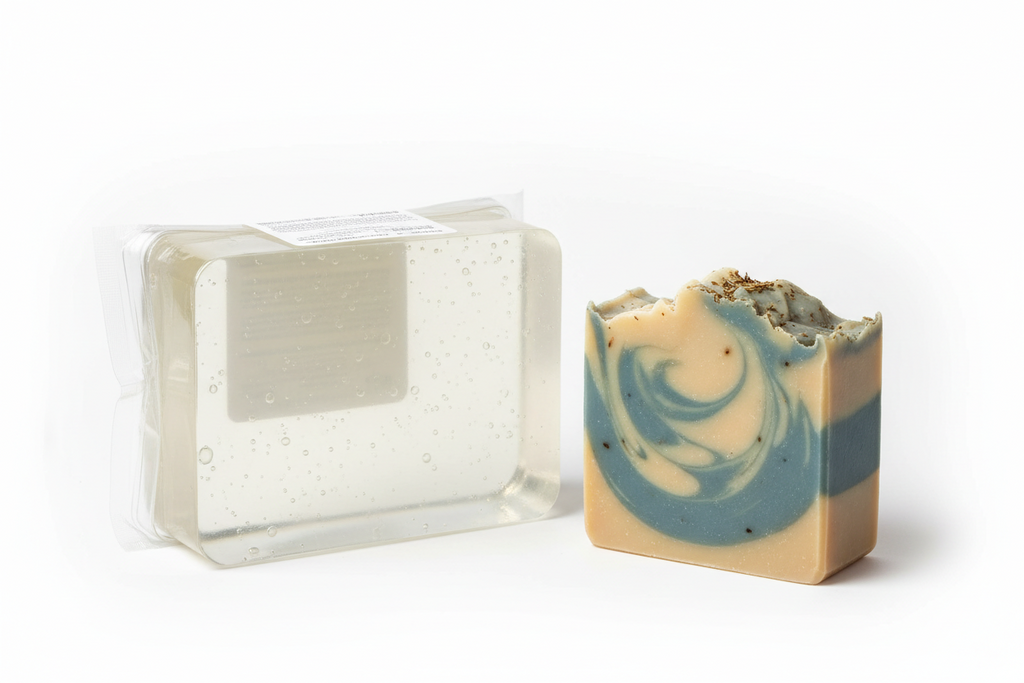
Melt & pour soap starts with a pre-made soap base that has already gone through the saponification process.
The soap maker melts the base, customizes it with additives, and pours it into molds to harden.
Common additions include:
-
Botanical extracts
-
Clays and natural colorants
-
Essential oils or fragrance oils
-
Butters and skin-conditioning ingredients
Unlike cold process soap, melt & pour does not require curing, meaning it can be used almost immediately after it hardens.
This makes it an excellent option for:
-
Beginners learning the craft
-
Artists creating intricate designs
-
Soap makers who want fast turnaround for production
Why Some Soap makers Say Melt & Pour Isn’t “Real Soapmaking”
The criticism usually comes down to one argument:
The soap maker didn’t create the soap from scratch.
Because the base is pre-made, some purists argue that melt & pour skips the true chemistry of soapmaking.
However, this perspective overlooks an important point.
Soapmaking is not only chemistry.
It’s also formulation, design, and skin care science.
A poorly chosen melt & pour base can still produce a drying bar of soap. A well-formulated base can produce a luxurious product that leaves skin soft and hydrated.
Choosing the right base is part of the craft.
Why Melt & Pour Still Requires Skill
Even though the saponification step is already completed, melt & pour soapmaking still requires expertise.
A good soap maker must understand:
Ingredient Compatibility
Not every ingredient works well in melt & pour.
Adding too many oils can cause:
-
sweating
-
softness
-
reduced lather
Temperature Control
If the base is overheated, it can burn or become cloudy.
If additives are added too hot, fragrances can flash off and botanicals can discolor.
Base Quality
The foundation matters.
Some bases are loaded with unnecessary fillers, while others are carefully formulated with beneficial ingredients like:
-
shea butter
-
goat milk
-
aloe
-
glycerin
A professional soap maker selects bases that benefit the skin, not just look good on the shelf.
Cold Process Has Its Own Challenges
Cold process soapmaking may be traditional, but it comes with complexity.
Soap makers must carefully calculate:
-
lye amounts
-
water ratios
-
superfat levels
-
oil balances
Mistakes can result in:
-
lye-heavy soap
-
soft bars
-
rancidity
-
poor lather
Cold process also requires patience. Waiting several weeks for curing can slow down production and inventory turnover.
For small businesses, this can become a logistical challenge.
The Artistic Side of Both Methods
Both techniques allow soap makers to create stunning products.
Cold process soaps often showcase:
-
swirling techniques
-
layered designs
-
textured tops
Melt & pour soaps excel at:
-
embeds and decorative shapes
-
transparent soaps
-
intricate color work
Many artisans actually combine the two methods.
For example, melt & pour embeds are sometimes placed inside cold process bars to create beautiful, complex designs.
In the end, both methods celebrate creativity.
So… Is Melt & Pour Cheating?
Not at all.
Think of it like baking.
A pastry chef might make croissants entirely from scratch, while another chef uses high-quality dough to create incredible desserts. Both are still skilled culinary artists.
Soapmaking works the same way.
What matters most is:
-
the quality of ingredients
-
the intention behind the formulation
-
the experience the soap provides for the user
At the end of the day, customers care about how the soap feels on their skin, not whether it started with lye in your kitchen.
The Real Goal: Good Soap
Whether a soap is made using cold process or melt & pour, the goal should always be the same:
Create a bar that is gentle, nourishing, and enjoyable to use.
A thoughtfully chosen melt & pour base can produce a beautiful, skin-loving soap.
A carefully formulated cold process recipe can produce a luxurious, artisan bar.
Both methods have value. Both require creativity. And both contribute to the incredible diversity of handmade soaps available today.
✔️ The debate may continue, but the truth is simple:
Great soap is great soap — no matter how it’s made.